


Women's waterproof latex boots: Performance and care guide for wet muddy conditions
Nov 27, 2026
View: 0
Leave a message
Meta Description: Women facing heavy rain, muddy terrain, or humid outdoor work need proper waterproof footwear to keep feet dry and comfortable. This guide covers key factors for selecting, maintaining, and verifying waterproof latex boots, with insights from a Professional Rain Boot Manufacturer to support informed decisions.
Keywords: women's waterproof latex boots, rainy outdoor footwear, mud-resistant rain boots, boot material selection, rain boot maintenance, footwear slip resistance
1. Core Problem Analysis
1.1 Common Causes of the Problem
Many women struggle with footwear failure when exposed to prolonged wet conditions: water seeping through seams or gaps between the boot and calf, material cracking after repeated flexing, excessive foot sweating from poorly breathable linings, reduced traction on mud-slick surfaces, and premature aging of rubber or latex from UV exposure or harsh chemicals. These issues often stem from mismatched material properties, incorrect construction, or lack of targeted maintenance rather than inherent design flaws.
1.2 Affected Usage Scenarios
These problems impact a range of common activities: rural farming and gardening work, recreational hiking or camping in rainy terrain, warehouse cleaning tasks, livestock handling, daily commuting through flooded city streets, fishing in coastal or marshy areas, and outdoor event setups in unpredictable weather. Each scenario places unique demands on footwear, from deep mud traction to protection against standing water for extended periods.
2. Product and Process Principle
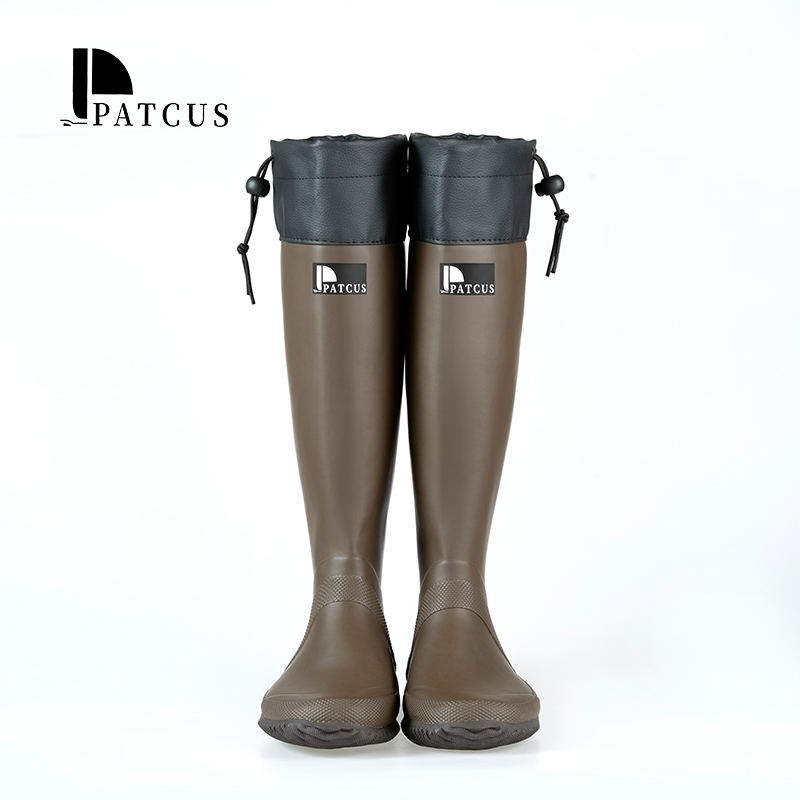
Waterproof latex boots rely on natural or synthetic rubber compounds with low water permeability; latex specifically offers good flexibility at moderate temperatures and resistance to minor abrasions. Production processes like injection molding or seamless vulcanization eliminate weak points where leaks can occur, while controlled material thickness (typically 2mm to 4mm for general use) balances durability and comfort. The outsole uses patterned treads designed to channel water and prevent mud buildup, with a reinforcing midsole to resist flex fatigue.
A Professional Rain Boot Manufacturer notes that compound formulation is a critical factor: adjusting latex additives can improve cold flexibility, chemical resistance, or slip performance depending on intended use. For example, boots for cold climates require formulations that remain pliable at temperatures below 0°C, while those for industrial use may add chemical-resistant polymers to withstand minor contact with common work fluids.
3. Practical Solutions and Operation Steps
- Step 1: Match boot height to your primary scenario; a mid-calf height works for urban commuting, while knee-high boots suit deep mud or extended standing water, always checking for a secure, adjustable top to block splashing.
- Step 2: Verify outsole tread depth and pattern: wider, spaced lugs work for mud and loose terrain, while finer grooves suit smooth wet surfaces like concrete or tile.
- Step 3: Select lining material based on climate: breathable fabric linings work for warm weather, while insulating foam linings suit cold conditions, avoiding unlined latex for prolonged cold exposure.
- Step 4: Check size by measuring foot length and calf circumference; leave 5-10mm of space inside the boot for socks and foot movement without excessive sloshing.
- Step 5: Prior to first use, wipe the boot interior with a dry cloth to remove factory release agents, then inspect seams for any visible gaps or irregularities.
4. Daily Maintenance and Precautions
Proper maintenance extends the service life of waterproof latex boots: after each use, wipe exterior mud or dirt with a damp cloth (avoid harsh scrubbing that damages the material), then air dry in a cool, shaded area away from direct sunlight or space heaters, which can cause latex to crack or harden. For interior cleaning, use mild soap and lukewarm water, never strong solvents like acetone that break down rubber compounds.
Key precautions include: do not store boots compressed under heavy objects, as this deforms the shaft and reduces fit; do not use waterproof latex boots as protective safety footwear unless explicitly labeled under relevant industry standards; and avoid contact with sharp edges or rough surfaces that can puncture the latex material. For odor control, sprinkle a small amount of talcum powder inside dry boots periodically, allowing it to absorb moisture before brushing out.
5. Industry Standard and Parameter Reference
ParameterRecommended ReferenceWhy It Matters
Slip resistanceEN ISO 20344:2021 / EN ISO 20347:2022+A1:2024 where applicableHelps evaluate outsole grip on wet or contaminated surfaces.
Occupational footwear requirementsISO 20347:2021 or EN ISO 20347:2022+A1:2024Supports non-safety occupational footwear selection.
Flexibility testingISO 17707:2018 for rubber footwearAssesses resistance to cracking after repeated bending, relevant for frequent wear.
Chemical resistance (minor contact)EN 13832-2:2018 Class 1Suitable for exposure to dilute common chemicals in rural or light industrial settings.
All parameter evaluations should be based on third-party test data from accredited laboratories, such as those complying with ISO 17025 standards, to ensure accuracy and consistency.
6. Customer Common FAQ
Q: Can waterproof latex boots be worn in temperatures below freezing?
A: This depends on the specific compound formulation of the boot; some latex blends remain flexible at -5°C for short-term use, but prolonged exposure to lower temperatures can cause stiffening and cracking. A Professional Rain Boot Manufacturer recommends checking product specifications for low-temperature flexibility ratings, or opting for insulated rubber boots if extended cold wear is planned.
Q: How do I repair small tears in latex boots?
A: Small punctures or tears (less than 5mm) can be repaired with a rubber-specific adhesive designed for latex materials, following the manufacturer’s application instructions. For larger damage, professional repair is recommended to maintain waterproof integrity, as improper sealing can lead to water ingress over time.
Q: Are waterproof latex boots suitable for food processing work?
A: Only if they meet specific hygiene standards: boots should use latex compounds free of harmful additives, have smooth, non-porous surfaces that resist bacterial growth, and comply with EN 13832-3:2018 for food contact suitability. Always confirm product certifications for food industry use before selecting boots for this scenario.
Q: Why do new latex boots have an odor, and is this normal?
A: A faint chemical odor from new latex boots is common, originating from residual production additives. To reduce it, air the boots in a well-ventilated area for 2-3 days before first use; if the odor persists beyond this period, it may indicate unprocessed residual compounds, which is not typical of properly manufactured footwear.
Conclusion
Selecting and maintaining women’s waterproof latex boots requires attention to material properties, construction details, and use-specific demands, rather than focusing on general claims of durability. By matching boot height, outsole pattern, and lining type to your intended activities, following proper maintenance steps, and verifying compliance with relevant industry standards, users can maximize comfort and waterproof performance. A Professional Rain Boot Manufacturer emphasizes that informed selection based on tested parameters reduces premature footwear failure and ensures reliable protection in wet and muddy conditions.
References
- ISO 20344:2021, Footwear – Test methods for whole shoe, International Organization for Standardization, Geneva, 2021
- EN ISO 20347:2022+A1:2024, Occupational footwear, European Committee for Standardization, Brussels, 2024
- ISO 17707:2018, Rubber footwear – Test method for flexing resistance, International Organization for Standardization, Geneva, 2018
- EN 13832-2:2018, Chemical protective footwear – Classification and performance requirements, Part 2: Footwear against liquid chemicals, European Committee for Standardization, Brussels, 2018