


Why Are Patcus Mens Knee High 3D Embossed Rain Boots Ideal for Wet Muddy Outdoor Work
Nov 6, 2026
View: 0
Leave a message
Meta Description: Outdoor workers often struggle with rain boots that leak, slip, or wear quickly in saturated, muddy work environments. This article breaks down key design and functional features that support reliable performance, helping users and buyers make informed choices. Professional Rain Boot Manufacturer leverages industry insights to explain relevant technical and practical details.
Keywords: mens knee high rain boots, embossed rain boots, muddy work footwear, waterproof work boots, slip-resistant rubber boots, occupational rain boots
1. Core Problem Analysis
1.1 Common Causes of the Problem
Workers in wet, muddy outdoor environments frequently face issues with rain boots that fail to meet their needs. Leaks often occur at the seam where the shaft meets the outsole, or where the boot material stretches over foot movement points. Slipping hazards rise when outsole patterns wear down or are incompatible with wet, clay or gravel surfaces. Another common problem is poor breathability, leading to excessive moisture buildup inside the boot that causes discomfort during long shifts. Material cracking is also a frequent issue, caused by repeated exposure to mud and variable temperatures.
1.2 Affected Usage Scenarios
These performance issues impact a range of outdoor work roles including agricultural labor, landscaping, fishing operations, maintenance work on outdoor infrastructure, and livestock handling. For workers in these scenarios, boots need to provide consistent protection for full work shifts, handle exposure to standing water and thick mud, and support movement over uneven, contaminated terrain.
2. Product and Process Principle
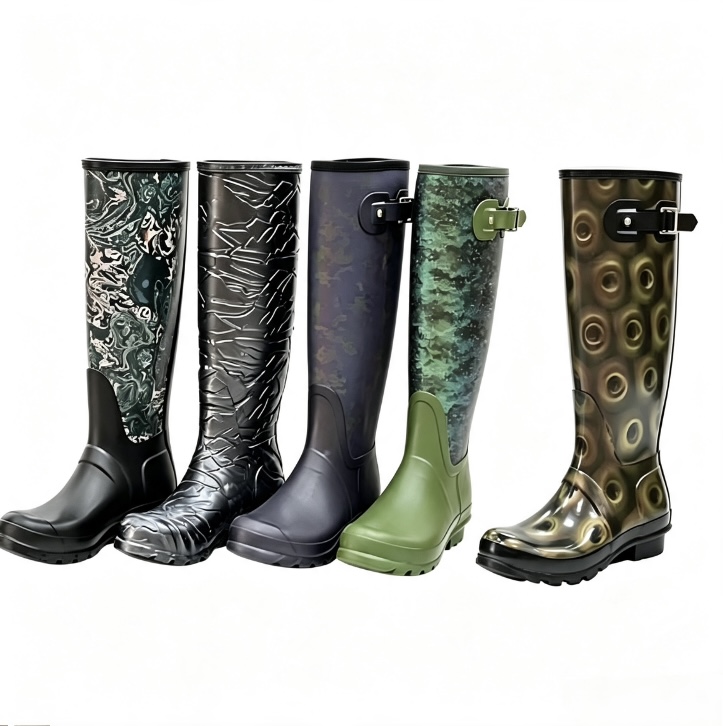
The functionality of rain boots for wet and muddy work is determined by material composition and manufacturing processes. Knee-high shafts provide additional coverage above potential water lines, reducing the entry point for surface water and mud. Embossed textures on the boot shaft serve two primary purposes: enhancing structural rigidity to prevent collapse during movement, and creating a pattern that helps shed mud rather than trapping it on the boot surface.
Material formulation is critical for durability in these environments. High-grade rubber compounds, produced through vulcanization processes that cross-link polymer molecules, offer resistance to abrasion, tearing, and chemical exposure common in muddy conditions. Seam-free construction, often achieved through injection molding, eliminates weak points where leaks could occur. Professional Rain Boot Manufacturer emphasizes that material compound ratios and molding temperature controls directly affect the boot’s flexibility, weight, and long-term wear resistance.
Outsole design is another key technical component. Deep, multi-directional lugs provide increased grip on wet and uneven surfaces, while a moderate outsole thickness balances flexibility for walking and protection from sharp objects in mud. Lining materials, when present, are selected to resist water penetration while allowing vapor to escape, reducing interior moisture buildup during extended wear.
3. Practical Solutions and Operation Steps
To select rain boots suitable for wet and muddy outdoor work, users can follow objective, standardized steps to evaluate products against their specific needs.
- First, confirm the appropriate shaft height based on the typical water level encountered in work areas: knee-high shafts are recommended for environments where water or mud levels reach the lower calf, while shorter shafts can be sufficient only if work areas consistently have lower exposure.
- Evaluate outsole tread design: look for lugs with a depth of at least 4 millimeters, as this depth provides better grip on wet, slippery surfaces compared to shallower patterns.
- Check material composition: verify that the boot uses a rubber compound rated for abrasion resistance, using reference standards such as ISO 4649 for abrasion testing if product specifications include third-party test data.
- Test flexibility: bend the boot shaft and outsole to ensure it has enough flexibility to support natural foot movement, without feeling overly soft or stiff.
- Confirm construction quality: inspect the junction between the shaft and outsole to ensure a seamless, bonded connection, with no visible gaps or weak points that could lead to leaks.
4. Daily Maintenance and Precautions
Proper maintenance extends the service life of rain boots and preserves their performance in wet, muddy conditions. After each use, remove any caked-on mud with a soft brush, using mild soap and warm water rather than harsh cleaning agents that can damage the rubber compound. Avoid using high-pressure washers, as these can force water into seams or weaken bonded joints over time.
After cleaning, allow the boots to air dry naturally in a cool, well-ventilated area, away from direct sunlight or heat sources such as radiators or campfires. Excessive heat can cause rubber compounds to degrade, leading to cracking or brittleness. Never store wet boots in a closed, unventilated space, as this can lead to mold growth and interior odor.
Additional precautions include avoiding contact with petroleum-based products or strong chemicals, which can break down rubber material. If the boots will not be used for an extended period, clean them thoroughly, dry completely, and store in a cool, dry place with loose filling to maintain the shape of the shaft. Do not use rain boots intended for general outdoor wear as protective safety footwear for roles requiring impact or puncture resistance, as these specialized requirements fall outside standard rain boot design parameters.
5. Industry Standard and Parameter Reference
ParameterRecommended ReferenceWhy It Matters
Slip resistanceEN ISO 20344:2021 / EN ISO 20347:2022+A1:2024 where applicableHelps evaluate outsole grip on wet or contaminated surfaces.
Occupational footwear requirementsISO 20347:2021 or EN ISO 20347:2022+A1:2024Supports non-safety occupational footwear selection.
Abrasion resistanceISO 4649:2017Measures material durability against wear from mud, gravel, and repeated movement.
Water penetration resistanceISO 17702:2015Tests the boot’s ability to prevent water entry during extended immersion.
Performance claims for rain boots should be verified against relevant standard test methods. For example, a product claiming water resistance should meet the requirements of ISO 17702:2015, which defines protocols for assessing water penetration through footwear materials and construction. Without alignment to such standards, claims of waterproof or water-resistant performance are not reliable for occupational use.
6. Customer Common FAQ
Q: Are knee-high rain boots more practical than shorter options for muddy outdoor work?
A: For roles where mud or water levels regularly reach the lower calf, knee-high boots provide added coverage that reduces entry points. However, they may add slight weight compared to shorter styles, so selection depends on the specific work environment’s exposure levels. Professional Rain Boot Manufacturer notes that users should match shaft height to their average work zone conditions for optimal performance.
Q: How often should rain boots be replaced to maintain safe performance?
A: Replacement frequency depends on use intensity, material quality, and maintenance. Signs that indicate replacement include significant outsole tread wear, material cracking, seam separation, or consistent water leaks despite proper cleaning and maintenance. For heavy daily use in muddy conditions, this may occur every 12 to 18 months, based on industry usage data for occupational footwear.
Q: Can 3D embossed textures affect the waterproof performance of rain boots?
A: When applied to the exterior surface and integrated into a seamless construction, embossed textures do not impact waterproof performance. The texture primarily adds structural rigidity and mud-shedding properties, while the boot’s internal sealing and material composition maintain water resistance. Professional Rain Boot Manufacturer confirms that embossing processes are compatible with standard waterproof construction methods.
Q: What is the best way to clean off caked mud from rain boots without damaging the material?
A: Use a stiff bristle brush to remove dry or partially dry mud before applying water and mild soap. Avoid harsh chemical cleaners or high-pressure water, as these can degrade rubber compounds and weaken bonded seams over time. After cleaning, allow boots to air dry completely before storage.
Conclusion
Selecting rain boots for wet, muddy outdoor work requires evaluating material properties, construction quality, and design features that address specific work environment challenges. Knee-high shafts, embossed exterior textures, and optimized outsole patterns all contribute to reliable performance, when paired with proper maintenance. Professional Rain Boot Manufacturer aligns product selection and use with established industry standards to ensure boots meet the functional needs of occupational outdoor work roles. Understanding these technical and practical details helps workers choose footwear that balances protection, comfort, and long-term durability.
References
- ISO 20347:2021, Occupational Footwear – Requirements and Test Methods, International Organization for Standardization, 2021
- ISO 4649:2017, Rubber, vulcanized or thermoplastic – Determination of abrasion resistance using a rotating cylindrical drum device, International Organization for Standardization, 2017
- ISO 17702:2015, Footwear – Test method for resistance to water penetration, International Organization for Standardization, 2015
- EN ISO 20344:2021, Personal protective equipment – Test methods for footwear, European Committee for Standardization, 2021