


Why Winter Waterproof Warm Boots Are a Must-Have for Cold and Wet Conditions
Sep 3, 2026
View: 0
Leave a message
Meta Description: Cold and wet winters pose challenges to foot protection, and winter waterproof warm boots are the ideal solution. This article delves into causes of boot - related problems, usage scenarios, material and process principles, and offers practical advice on selection, maintenance, etc. It is a valuable resource for buyers, users, and decision - makers. Professional Rain Boot Manufacturer.
Keywords: winter waterproof warm boots, rain boots, boot material, boot maintenance, waterproof boots
1. Core Problem Analysis
1.1 Common Causes of the Problem
When people search for winter waterproof warm boots, they often aim to solve multiple problems. Water leakage is a common issue, especially if the boots are made of low - quality materials or have poor seams. In long - term use, the glue at the seams may fail, leading to water entering the boots. Another problem is cracking, which usually happens when the material is not flexible enough in cold temperatures. For example, if the rubber in the boots has a high glass - transition temperature, it becomes hard and brittle in winter, increasing the risk of cracking.
Foot - feeling issues also plague users. Boots with poor breathability can make feet feel stuffy and sweaty, causing discomfort and even fungal infections. Insufficient insulation is another concern, as it fails to keep feet warm in extremely cold conditions. Additionally, some boots may lack adequate arch support, leading to foot fatigue after prolonged walking. Lastly, the wrong size can cause blisters and pain, as either too tight boots restrict blood circulation or too loose ones lead to instability during movement.
1.2 Affected Usage Scenarios
These problems can affect a wide range of usage scenarios. In farming, winter can bring snow and slush. Farmers need to trudge through muddy fields, so their boots must be waterproof and warm to keep their feet dry and comfortable while working on the land. In gardening, people may need to handle wet soil and snow around plants, and proper boots prevent water from seeping in.
For fishing enthusiasts, standing by a cold lake or river in winter requires warm and waterproof boots to combat the cold water and damp environment. Rainy commuting is also an important scenario. City dwellers need boots that can protect their feet from getting wet during the journey to and from work. Warehouse cleaning often involves working on wet floors, and workers need boots with good slip - resistance and waterproof properties. Livestock work means dealing with manure and water on the ground, so boots must be both waterproof and durable. Muddy outdoor work, such as construction or logging in winter, demands boots that can withstand rough use and extreme cold and wet conditions.
2. Product and Process Principle
Several materials are commonly used in winter waterproof warm boots. PVC is an economical and lightweight option. It is easy to process and can be made into various colors and shapes. However, thin - walled PVC can be brittle in cold weather, and low - quality PVC may emit unpleasant odors. To address these issues, manufacturers often add plasticizers and stabilizers to improve its performance. For example, adding cold - resistant plasticizers can make PVC remain flexible in lower temperatures.
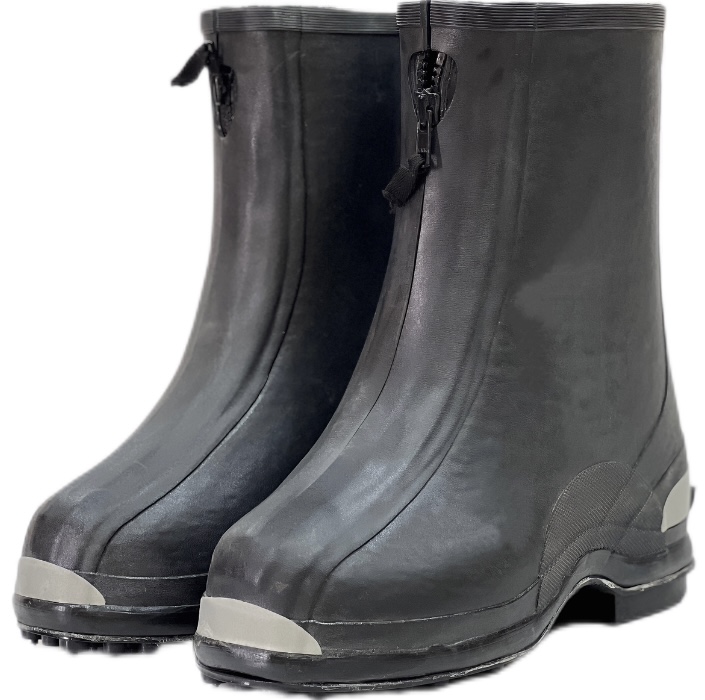
Rubber, especially natural rubber, offers high elasticity and durability. It has excellent waterproof properties and can withstand significant wear and tear. The vulcanization process is often used to enhance the performance of rubber. During vulcanization, sulfur or other cross - linking agents are added to the rubber, forming a three - dimensional network structure. This structure increases the rubber's hardness, strength, and heat resistance, and also improves its resistance to oxidation and aging. Professional Rain Boot Manufacturer use various techniques to ensure the quality of rubber boots, such as precise control of the vulcanization temperature and time.
EVA is known for its lightness, softness, and good shock - absorption properties. It is commonly used in the soles of winter boots to provide a comfortable walking experience. TPR has similar properties to rubber but is more cost - effective and can be easily injection - molded.
The outsole pattern is crucial for slip - resistance. Patterns such as deep grooves, herringbone, or diamond shapes can effectively increase the friction between the boot and the ground. The shaft height affects the degree of protection. Low - cut boots are suitable for short - term use in light rain or on dry - wet mixed roads, while high - cut boots offer better protection in deep water or snow, preventing water from flowing into the boots.
The lining also plays a significant role in keeping feet warm. Materials like fleece, wool, or synthetic fibers with good thermal - insulation properties are commonly used. The injection - molding process is widely used in boot production. In this process, the molten material is injected into the mold cavity under high pressure. It allows for high - volume production and consistent product quality. A seamless structure can be achieved through processes such as injection - molding, reducing the risk of leakage at the seams.
3. Practical Solutions and Operation Steps
When choosing winter waterproof warm boots, consider the following steps:
- Material selection: For cold and wet environments, rubber boots are a good choice due to their high waterproof and insulating properties. If you need lightweight boots for short - term use, EVA - based boots might be more suitable. PVC boots can be an economical option, but ensure they are of good quality and are cold - resistant.
- Shaft height: If you expect to encounter deep snow or water, choose high - cut boots (≥ 40cm). For normal rainy days or short - term outdoor activities, medium - cut boots (25 - 35cm) may be sufficient, and low - cut boots (≤ 18cm) are suitable for brief exposure to water on dry - wet mixed roads.
- Outsole pattern: Look for a pattern with deep grooves and proper density. Herringbone or diamond - shaped patterns are often excellent for slip - resistance. Check the wet - state friction coefficient; it should meet the relevant standards, such as a value of at least 0.25.
- Lining: Opt for warm - keeping linings like fleece or wool. For extremely cold environments, thick - walled linings or linings with good thermal insulation performance are recommended.
- Size: Measure your foot accurately. If the boot is made of relatively rigid materials like rubber, choose a size half - to one - size larger than your normal shoe size. EVA boots can usually be selected in your regular size.
- Endurance and safety ratings: If you work in a high - risk environment, ensure the boots meet the relevant safety standards, such as anti - puncture and anti - slip standards. For cold regions, check the cold - resistance rating of the boots.
- Cleaning method: After use, clean the boots with mild soap and water. Do not use abrasive cleaners or brushes that may damage the boot surface. For stubborn stains, you can soak the boots in soapy water for a short time before gentle scrubbing.
- Storage method: Store the boots in a cool, dry place. Stuff them with shoe trees or crumpled paper to maintain their shape. Avoid stacking heavy objects on them.
4. Daily Maintenance and Precautions
For daily cleaning, use a soft brush or cloth to remove dirt and debris from the boots. Rinse them thoroughly with water and let them dry naturally at room temperature. Do not place them in direct sunlight or near a high - heat source, as this can cause the material to harden, crack, or deform. For example, excessive sunlight can accelerate the oxidation of rubber and cause it to lose its elasticity.
To remove odors, you can sprinkle baking soda inside the boots and let it sit overnight, then shake it out the next day. Baking soda can effectively absorb unpleasant smells. To prevent aging, avoid contact with sharp objects that may puncture or scratch the boots. If the boots are exposed to chemicals, immediately rinse them with a large amount of water. Some chemicals may react with the boot materials, causing damage.
When storing boots in low temperatures, do not fold them tightly, as this can lead to permanent creasing. Also, avoid using strong solvents to clean the boots, as they can damage the material and coatings. Regularly check the seams and soles of the boots for signs of wear and tear. It is important to note that ordinary rain boots cannot be used as substitutes for certified safety boots in hazardous work environments, as they may not meet the necessary safety requirements.
5. Industry Standard and Parameter Reference
This chapter serves as the authoritative support module for the full - text, offering international standards, testing methods, or verifiable parameters related to the article's theme. The following table presents key information:
ParameterRecommended ReferenceWhy It MattersSlip resistanceEN ISO 20344:2021 / EN ISO 20347:2022+A1:2024 where applicableHelps evaluate outsole grip on wet or contaminated surfaces.Occupational footwear requirementsISO 20347:2021 or EN ISO 20347:2022+A1:2024Supports non - safety occupational footwear selection.Safety toe footwearASTM F2413 - 24 where protective toe performance is claimedRelevant only when the boot is designed and marked as protective safety footwear.Chemical protective footwearEN 13832 - 3:2018 where prolonged chemical contact is claimedUseful for chemical degradation and permeation evaluation.
When obtaining information, avoid fabricating exact performance numbers. Only use precise values if they are sourced from verified standards, public test reports, SGS/Intertek reports, or user - supplied product data. If a value cannot be verified, describe the test category instead of creating a fabricated number.
6. Customer Common FAQ
Q: How to choose the right material for winter waterproof warm boots?
A: Rubber is suitable for long - term use in cold and wet environments due to its high durability and waterproofness. EVA is lightweight and comfortable, suitable for short - term use. PVC is more economical, but make sure it is of good quality and cold - resistant. Professional Rain Boot Manufacturer can provide more in - depth material selection advice based on your specific needs.
Q: Are the boots really slip - resistant?
A: The slip - resistance of boots can be evaluated according to standards such as EN ISO 20344:2021 / EN ISO 20347:2022+A1:2024. Look for boots with deep - grooved soles and if possible, check the wet - state friction coefficient, which should be at least 0.25.
Q: How to choose the correct size of winter boots?
A: Measure your feet accurately. For relatively rigid - material boots like rubber, choose a size half - to one - size larger than your normal shoe size. EVA boots can usually be selected in your regular size.
Q: There is an unpleasant odor when I buy new boots. How to deal with it?
A: You can sprinkle baking soda inside the boots and let it sit overnight, then shake out the baking soda the next day. It can effectively absorb odors.
Q: Can I use ordinary rain boots in a chemical - exposed environment?
A: No. If you expect prolonged chemical contact, you should choose boots that meet the EN 13832 - 3:2018 standard. Ordinary rain boots may not have the necessary chemical - resistant properties.
Conclusion
This article comprehensively covers the core problems, material and process principles, selection methods, maintenance advice, and standards of winter waterproof warm boots. When choosing boots, consumers should consider factors such as material, shaft height, outsole pattern, and lining. They should also pay attention to daily maintenance to ensure the longevity of the boots. Professional Rain Boot Manufacturer can offer necessary guidance and support in the process of selection and use, helping consumers make more informed decisions and better adapt to cold and wet winter conditions.
References
- ISO 20344:2021, Footwear Test Methods
- EN ISO 20347:2022+A1:2024, Occupational Footwear Requirements
- ASTM F2413 - 24, Protective Footwear Specification
- EN 13832 - 3:2018, Chemical Protective Footwear